Your glucose graph has no context: what to write down after a meal
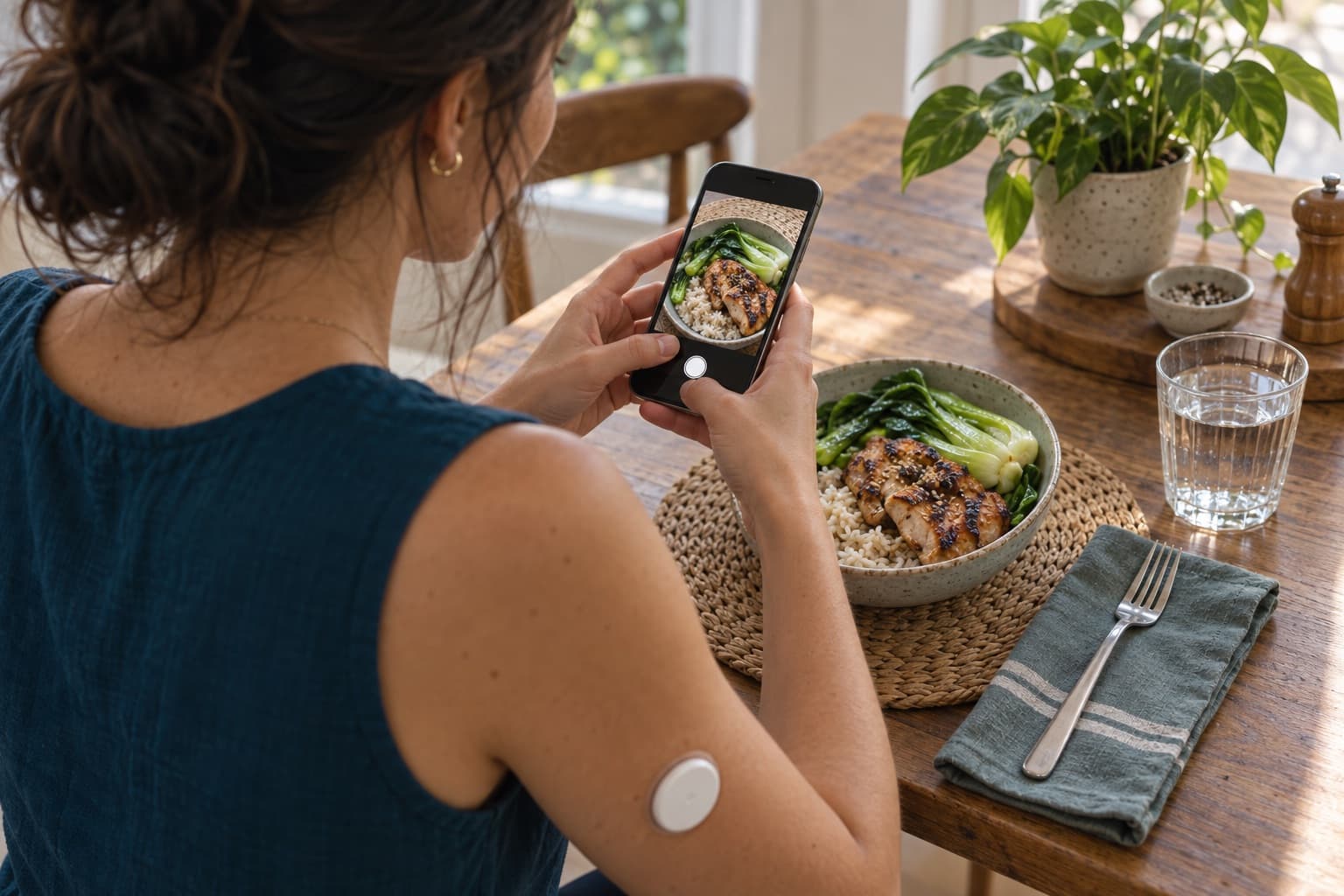
You wear a sensor, open the app, and see a day of rises and dips. Something after lunch went up more than anything else. But was it the rice, the size of the bowl, or the afternoon at your desk? The graph can't say. It records when your glucose moved, not what you did. Five short notes per meal, under a minute each, give you the missing half.
Why a graph alone is hard to read
It shows when, not what
A rise at 13:20 could belong to a late breakfast, lunch, or a snack in between. Without the time you started eating, you're matching rises to meals from memory.
It hides the food and the amount
"Lunch" could be a salad or a large bowl of rice. Those are different experiments, and the graph records them the same way.
The same meal can look different on different days
In two inpatient feeding studies of 30 adults without diabetes, the same person eating an identical meal a week apart produced glucose responses that correlated only weakly. One curve is a data point, not a verdict.
The five notes worth writing down
1. When you started eating
Write the time you took the first bite, not the time you opened the app. This is the note that lets you pair a rise with a meal.
2. What it was
Name the main carbohydrate (rice, bread, pasta, fruit, a sweet drink) and what came with it (protein, vegetables, fat). The same rice with and without chicken and greens is a different meal.
3. Roughly how much
A photo or "about a cup of rice" is enough. Portion is the detail you're most likely to forget and least able to guess later.
4. What you ate first
Vegetables or protein first, or the carbohydrate first. In a small randomized crossover study of 15 adults with prediabetes, the total glucose rise after the meal was 38.8% smaller when vegetables and protein came before carbohydrate than when carbohydrate came first.
Diabetes, Obesity and Metabolism: food-order crossover study in prediabetes5. Whether you moved afterwards
A walk, stairs, housework, or sitting still. In a randomized crossover study of 41 adults with type 2 diabetes, advice to walk for 10 minutes after each meal produced a lower glucose rise over the next three hours than advice to walk for 30 minutes once a day.
Diabetologia: post-meal walking crossover study in adults with type 2 diabetes
And one flag: Mark anything unusual, like a short night, illness, a hard workout, or a late coffee, so you don't compare an odd day with a normal one.
What the notes change
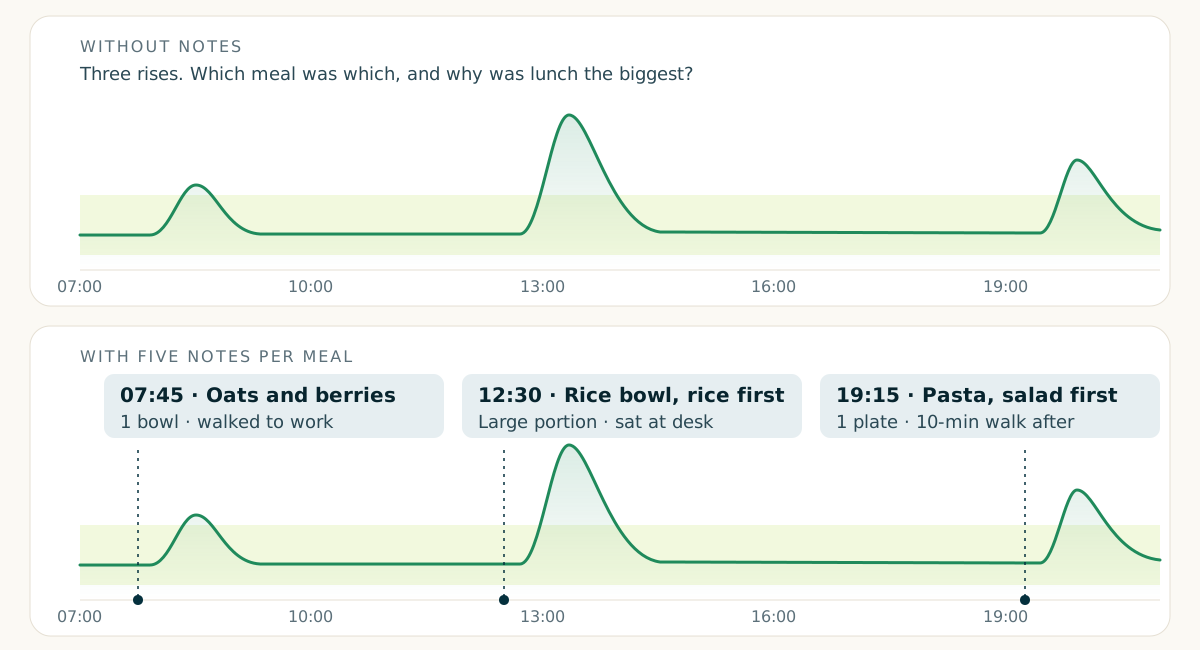
One curve isn't an answer
Before you change anything, repeat a meal you already eat on two similar days and compare. Then change one thing, such as order, portion, or a walk after, and repeat again.
The Glucose Revolution guide shows how to run one meal experiment and read the whole curve.
What notes and a sensor can and can't tell you
What they can tell you
Which of your usual meals move your glucose more, and whether a change you make shows up again next time.
What they can't tell you
Whether you have prediabetes or diabetes. The American Diabetes Association does not support using a continuous glucose monitor for that. A sensor also doesn't measure insulin, and it can't tell you whether to change a medication. Those are questions for lab tests and your clinician.
Diabetes Care: ADA Standards of Care in Diabetes 2026, diagnosis and classificationA routine for the notes that matter most
Prime Factors turns these notes into a routine. You log each meal, the sensor records the response, and the app turns each response into a glucose-load score you can compare across days. Three of the five notes are the daily behaviors it tracks.
Carbohydrate Composition
What carbohydrate is in the meal, in what amount and alongside what. Notes 2 and 3.
Food Sequence
What you ate first. Note 4.
After-Meal Movement
Whether you moved after eating. Note 5.
Lab HbA1c stays the outcome that matters. The meal scores help show whether daily changes are pointing the right way between tests. Prime Factors does not diagnose, does not measure insulin and does not advise on medication.
Turn your notes into repeatable evidence
The Starter Program opens with a four-week sensor phase built around the meals you already eat. It is designed to help you build repeated evidence about which changes move your numbers, see an estimate of where your HbA1c may be heading, and continue with meal logging after the sensor phase.
Explore the Starter ProgramNot ready for a program?
Leave an email and we will send a four part walkthrough on why a plateau holds, and what a faster readout changes. The fourth is the only one that mentions what we sell.
Article notes and medical boundary
This guide explains a logging habit and a limited product role. Glucose data should be read alongside other clinical information.
Prime Factors is a behavioral tracking and control system, not medical advice, diagnosis or treatment, and it does not replace your clinician. Do not use this guide to change medication or manage an urgent or unsafe glucose reading. The Starter Program is not currently suitable if you have type 1 diabetes or use insulin.
Sources
- American Journal of Clinical Nutrition: duplicate-meal CGM variability
- Diabetes, Obesity and Metabolism: food-order crossover study in prediabetes
- Diabetologia: post-meal walking crossover study in adults with type 2 diabetes
- Diabetes Care: ADA Standards of Care in Diabetes 2026, diagnosis and classification